
How Many Days Do You Need to Visit Northern Pakistan?
To properly see Northern Pakistan without spending your whole trip stuck in a car, 11 to 14 days is ideal. The distances between valleys are big, and travel along mountain roads takes time.
A 12-day trip gives you enough time to make the journey up from Islamabad, hike to high base camps, and spend a few quiet days exploring the villages of the Hunza Valley.
Is Travelling in Gilgit-Baltistan Difficult to Plan?
It can be tricky because mountain logistics change quickly. Between booking 4x4 jeeps for rugged tracks, coordinating hiking gear, and managing long road travel on the Karakoram Highway, there are quite a few moving parts.
Following a tested route that balances active trekking days with mountain town rest days makes the entire trip run much more smoothly.
Day 1: Arrive in Islamabad and Explore the Capital
Fly into Islamabad International Airport (ISB). Most international flights land early in the morning or late at night. Check into your hotel and take some time to rest after your flight.
In the afternoon, head into the city to visit the famous Faisal Mosque, one of the largest mosques in the world, set right against the green Margalla Hills. Afterward, stop by a local restaurant for your first taste of Pakistani food, such as fresh chicken karahi, lentils, and hot naan straight from the tandoor.

Day 2: The Drive North via the Babusar Pass
Start early for a long, scenic driving day heading north into the mountains. The route takes you through the green Kaghan Valley and past the town of Naran.
As you climb higher, you will pass the blue waters of Lulusar Lake before crossing Babusar Top, a high mountain pass sitting at 4,170 metres. The air is crisp and cool up here, with wide views across the surrounding ridges. Head down the other side of the pass to meet the Karakoram Highway, finishing your day in Chilas for dinner and a good night of rest.

Day 3: Jeep Ride and Hike to Fairy Meadows
Drive from Chilas to Raikot Bridge on the Karakoram Highway. This is where the pavement ends and the real mountain adventure begins.
Hire a local 4x4 jeep to tackle the steep, rocky track carved into the side of the gorge up to the small village of Tattu. From Tattu, leave the vehicles behind and hike the 6 km trail up through pine forests. As you climb the final ridge, you step out onto the wide green plateau of Fairy Meadows.
The view here is incredible, with the massive snowy north face of Nanga Parbat (8,126 metres) towering directly above the log cabins. Settle into your cabin and spend the evening around a campfire watching the stars.
Hike details:
- Distance: About 6 km up from Tattu
- Elevation Gain: 680 metres
- Time: 2 to 3 hours

Day 4: Hike to Nanga Parbat Base Camp
Wake up early for one of the most rewarding day hikes in the Himalayas. The trail leaves Fairy Meadows and gently winds through alpine pastures to Beyal Camp, where you can stop at a wooden hut for a cup of hot milk tea.
From Beyal Camp, the trail gets steeper and crosses rocky moraine alongside the massive Raikot Glacier. Keep climbing until you reach the base camp site, sitting at roughly 4,000 metres. You are standing right beneath the ice walls of the world's ninth-tallest mountain. Soak in the views before hiking back down to Fairy Meadows for dinner.
Hike details:
- Distance: Around 16 km round trip
- Elevation Gain: 800 metres
- Time: 6 to 7 hours round trip

Day 5: Journey into the Hunza Valley
Hike back down the forest trail from Fairy Meadows to Tattu, then take the jeeps back down to Raikot Bridge.
Rejoin the Karakoram Highway and head north into the Hunza Valley. The drive passes through Gilgit and offers roadside views of Rakaposhi, a peak so steep that its snow wall drops thousands of metres straight down to the valley floor.
Arrive in the mountain town of Karimabad by late afternoon. Check into your lodge, relax among the apricot trees, and visit a local cafe run by local women to try regional dishes like chapshuro (meat-filled pastry) and walnut cakes.

Day 6: Explore Karimabad and Ancient Forts
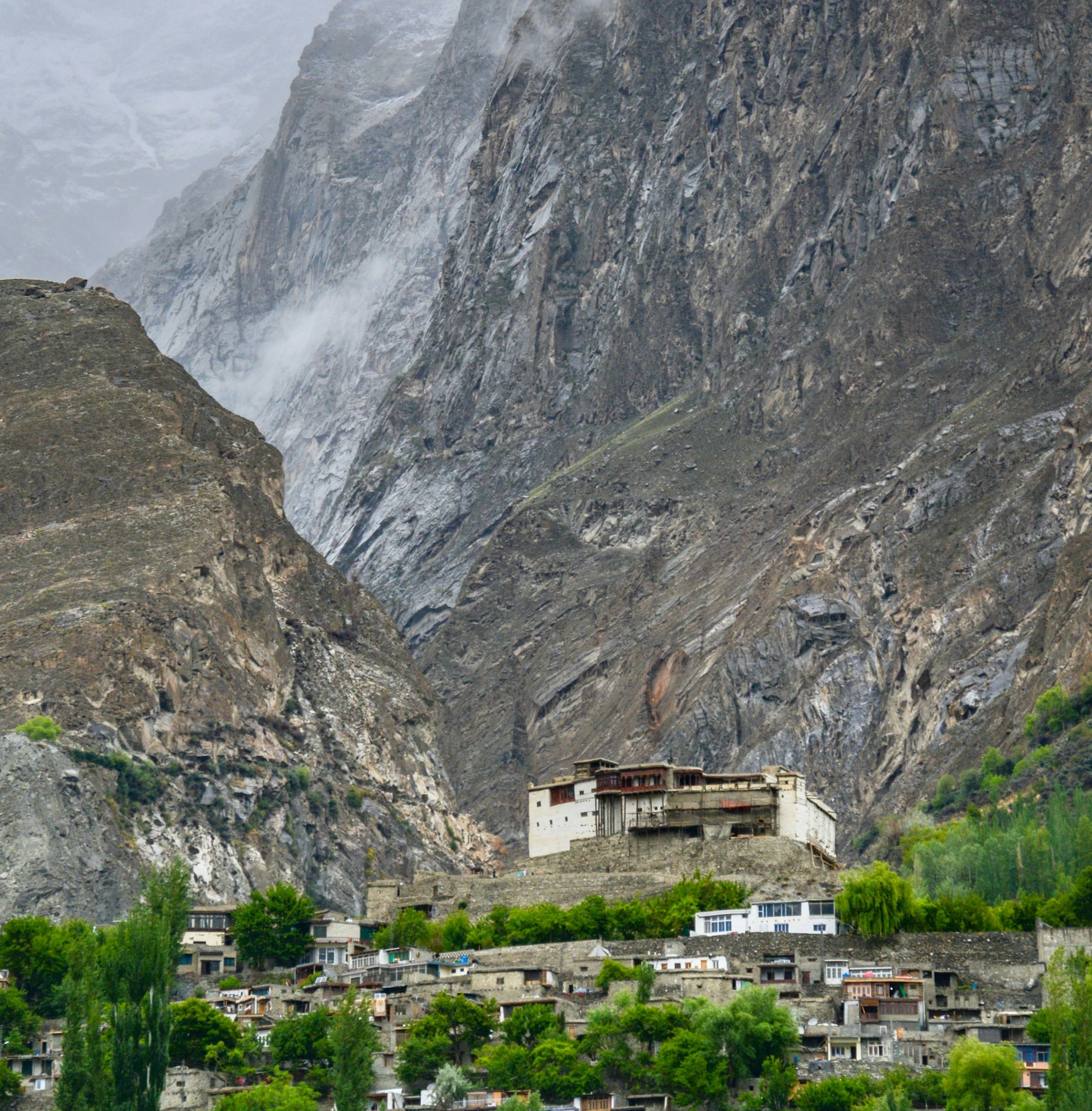
Spend a full day exploring Karimabad at a slower pace. In the morning, walk up the steep stone path to Baltit Fort, which sits high on a ridge looking out over the entire Hunza Valley.
After touring the fort, spend your afternoon wandering the cobblestone bazaar. Karimabad is famous for its handmade wool scarves, dried fruits, and local gemstone shops. Sit outside on a cafe terrace with a coffee, take in the views of Ultar Sar and Ladyfinger Peak, and watch everyday mountain life unfold.
Day 7: Trek to Hapakun Campsite
Have a quiet morning in Karimabad before taking a short 30-minute drive south to the village of Minapin in the Nagar Valley.
Minapin is the starting point for the trek to Rakaposhi Base Camp. After lunch in the village, begin the hike through pine woods and along the edge of the Minapin Glacier.
The trail climbs steadily until you break out into Hapakun, a high mountain meadow dotted with shepherd huts. Set up camp on the grass, drink tea with the local shepherds, and enjoy sleeping in a tent beneath the stars.
Hike details:
- Distance: 6 km from Minapin to Hapakun
- Elevation Gain: 780 metres
- Time: 3 to 4 hours

Day 8: Rakaposhi Base Camp and Eagle's Nest
Start hiking after breakfast up the ridgeline toward Tagaphari, the site of Rakaposhi Base Camp.
The views here are jaw-dropping. You stand directly opposite Rakaposhi (7,788 metres) and Diran Peak (7,266 metres), with a massive river of broken white ice flowing directly beneath the cliffs. After spending time at the viewpoint, hike all the way back down the mountain to Minapin.
From Minapin, drive up to the hilltop viewpoint of Duiker, also known as Eagle's Nest. It is one of the highest villages in Hunza and gives you a 360-degree sunset view over the valley peaks. Finish the day with a campfire barbecue.
Hike details:
- Distance: Around 13 km (Hapakun to Base Camp and all the way down to Minapin)
- Elevation Gain: 560 metres up, 1,340 metres down
- Time: 5 to 6 hours

Day 9: Attabad Lake, Baskochi Meadow, and Ghulkin
Drive further north along the Karakoram Highway to Attabad Lake. This lake was created by a massive landslide in 2010 and is famous for its bright turquoise water. Rent a small wooden boat to get out onto the water and see the cliffs up close.
In the afternoon, hike up the steep trail to Baskochi Meadow. It is a short, direct climb, but once you reach the top you get an incredible aerial view of the lake winding through the mountains.
After descending, drive a few minutes down the road to the traditional village of Ghulkin. Check into a family-run homestay to experience authentic Wakhi hospitality, warm tea, and home-cooked food.
Hike details:
- Distance: 3.7 km return
- Elevation Gain: 400 metres
- Time: 1 to 1.5 hours up

Day 10: Hussaini Bridge, Passu Cones, and Borith Lake
Start the morning by visiting the famous Hussaini Hanging Bridge, a suspension bridge made of thin cables and spaced wooden planks that crosses the wide Hunza River.
Next, head up the road to Borith Lake, a calm saltwater lake where you can relax, swim, or rent a small pedal boat. Continue along the Karakoram Highway to see the famous Passu Cones, a row of sharp, jagged granite spires rising straight into the sky.
Hike out to the edge of the Passu Glacier moraine for sunset before returning to your homestay in Ghulkin. In the evening, your host family can show you how to roll and cook traditional paratha bread on the stove.

Day 11: Drive the Karakoram Highway Back to Islamabad
Begin the long drive south back towards the capital. Travelling back down the Karakoram Highway gives you a second chance to take in the mountain views along the river gorges.
Arrive back in Islamabad by late evening, check into your hotel, and gather for a final dinner to celebrate the end of a big mountain journey.

Day 12: Farewell and Departure
Enjoy a relaxed breakfast at your hotel in Islamabad. If you have time before your flight, explore the local markets or grab a final lunch in the city. Head to Islamabad International Airport for your flight home.

Frequently Asked Questions About Travelling in Pakistan
What is the best time of year for this Pakistan itinerary?
The best months are June, August, September, and early October. During these months, the mountain roads and high passes like Babusar are open and clear of snow. July brings higher rainfall from the summer monsoon in the lower valleys, which can cause occasional road delays, so June and September are widely considered the sweet spot.
How fit do you need to be for this route?
This is an active trip with several steep mountain hikes. You do not need to be a marathon runner, but you should be comfortable walking 4 to 6 hours on steep, uneven rocky trails with elevation gains of 500 to 800 metres. Regular walking, stair climbing, or hiking before you arrive will make your days much more enjoyable.
Do I need a visa to travel to Pakistan?
Yes, most travellers need a tourist visa before entering the country. Fortunately, Pakistan operates an easy online e-Visa system. You can apply on the official government visa portal a few weeks before departure, and approvals are typically granted within a few business days.
Can I use credit cards, or do I need cash?
Cash is essential in Northern Pakistan. While major hotels in Islamabad accept credit cards, almost all guesthouses, local cafes, jeeps, and mountain shops in Gilgit-Baltistan only take Pakistani Rupees (PKR). ATMs in mountain towns like Karimabad can be unreliable, so it is best to withdraw enough cash while you are in Islamabad before heading north.
Final Thoughts
Northern Pakistan offers a scale of mountain scenery that is hard to find anywhere else on earth. From the silence of waking up opposite Nanga Parbat to the friendly hospitality of families in the Hunza Valley, it is an adventure that stays with you long after you pack your bags.
Pulling together all the mountain jeeps, local homestays, trail permits, and long highway journeys on your own takes a lot of time. If you want to skip the logistics headaches and experience these high trails alongside a fun group of like-minded travellers, come join us!
Check out our upcoming small-group trips to Pakistan and grab your spot with our crew.